

Article: Gold-Filled vs Gold-Plated vs Rope: What Holds Up in Water
Gold-Filled vs Gold-Plated vs Rope: What Holds Up in Water
Gold-filled has a thick layer of real gold bonded to a base metal, at least one-twentieth of the item’s metal weight under the FTC Jewelry Guides, so it outlasts gold-plated, which is a thin coating that can wear through. None of the gold finishes are fully waterproof. Tula Blue’s hand-spun rope has no coating to lose.
Searches for whether gold-plated jewelry tarnishes nearly double every December, right when everyone is buying gifts, and plenty of the people typing them have just watched a piece turn on them. A chain that looks right out of the box can leave a green line on your neck after one hot day at the lake.
If you live in your jewelry, in the shower, the pool, the gym, and the ocean, you already know the drawer where the pieces that couldn’t keep up end up. Most of them were gold-plated, or finished in something that looked like it.
We make rope jewelry in Texas, so you should know where we stand. Rope is the alternative to metal, and every finish below gets a fair read before we get to it.
Gold-filled vs gold-plated vs rope at a glance

The FTC Jewelry Guides are advisory, and they define most gold terms precisely. They say nothing about the word waterproof, so any seller can use it, which makes what sits underneath the claim the thing to read.
Swipe sideways to see the whole table.
| Finish | What it is | Tarnish | Skin | How long it lasts |
|---|---|---|---|---|
| Gold-plated | Gold alloy, 10K or higher, applied by any process. Electroplate means at least 0.175 microns of pure gold, heavy electroplate at least 2.5 microns of pure gold | The gold doesn’t, the base metal under it can | Green mark once copper in the base shows | Shortest. The layer wears through first at clasps and edges |
| Gold vermeil | Sterling silver base, 10K+ gold, at least 2.5 microns of pure gold | Sterling shows once the gold wears | Lower risk, sterling contains copper | Longer than plating, until the gold wears and sterling shows |
| PVD-coated stainless steel | Stainless steel with a thin colored coating applied in a vacuum. The gold color is the coating, usually titanium nitride, not gold | The steel doesn’t tarnish, but the coated color can lighten and wear away at rubbing points | Depends on the steel underneath | Usually fine day to day, but the color will change eventually where the piece rubs most, at clasps, edges and ring bands, and the silver-gray steel shows through |
| Gold-filled | Gold alloy, 10K or higher, mechanically bonded, at least 1/20 of the item’s metal weight | Thick layer is slow to wear through | Slow to expose the base metal | Much longer than plating. The layer is thick enough for daily wear, though high-contact spots like ring bands can still wear through eventually |
| Solid gold | Gold alloy throughout, karat marked | High karat resists | 18K+ yellow gold is on the AAD nickel-safe list | The longest. Gold all the way through |
| Sterling silver | At least 925/1,000 pure silver | Yes, and it polishes off | Copper in the alloy greens some skin | Lasts, but dulls without polishing and darkens faster in water |
| Hand-spun rope | Nautical-grade rope, no metal | Never. No metal to react | Metal-free | No coating to wear through |
No source gives a number of years, so we ranked them instead.
The FTC doesn’t rate how finishes handle water, so this is how jewelers and the sources below describe each one.
Swipe sideways to see the whole table.
| Finish | Shower | Pool (chlorine) | Ocean (salt) | Sweat |
|---|---|---|---|---|
| Gold-plated | Layer thins with repeats | Wears faster | Wears faster | Wears at contact points |
| Gold vermeil | Holds longer than plating | Rinse after | Rinse after | Sterling shows when the gold wears |
| PVD-coated stainless | Fine | Fine, rinse after | Fine, rinse after | Usually fine, color can wear at rubbing points |
| Gold-filled | Occasional is fine | Rinse after, skip long soaks | Rinse after | Usually fine, can wear at high-contact points |
| Solid gold | Fine | Caution on lower karats | Fine | Fine |
| Sterling silver | Speeds tarnish | Darkens faster | Darkens faster | Darkens faster |
| Hand-spun rope | Fine | Fine | Fine, made for salt water | Fine |
Rope is the alternative to metal

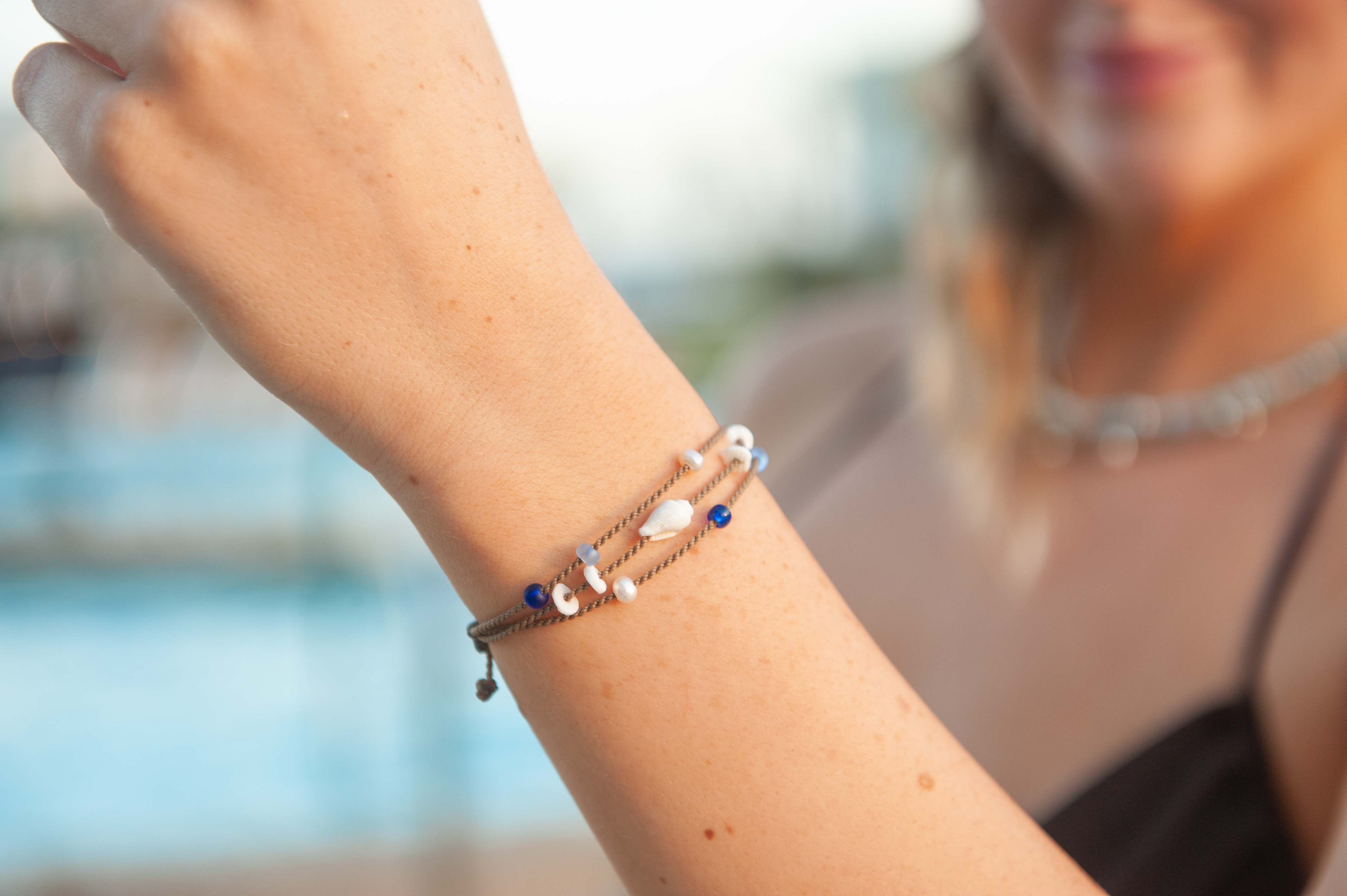
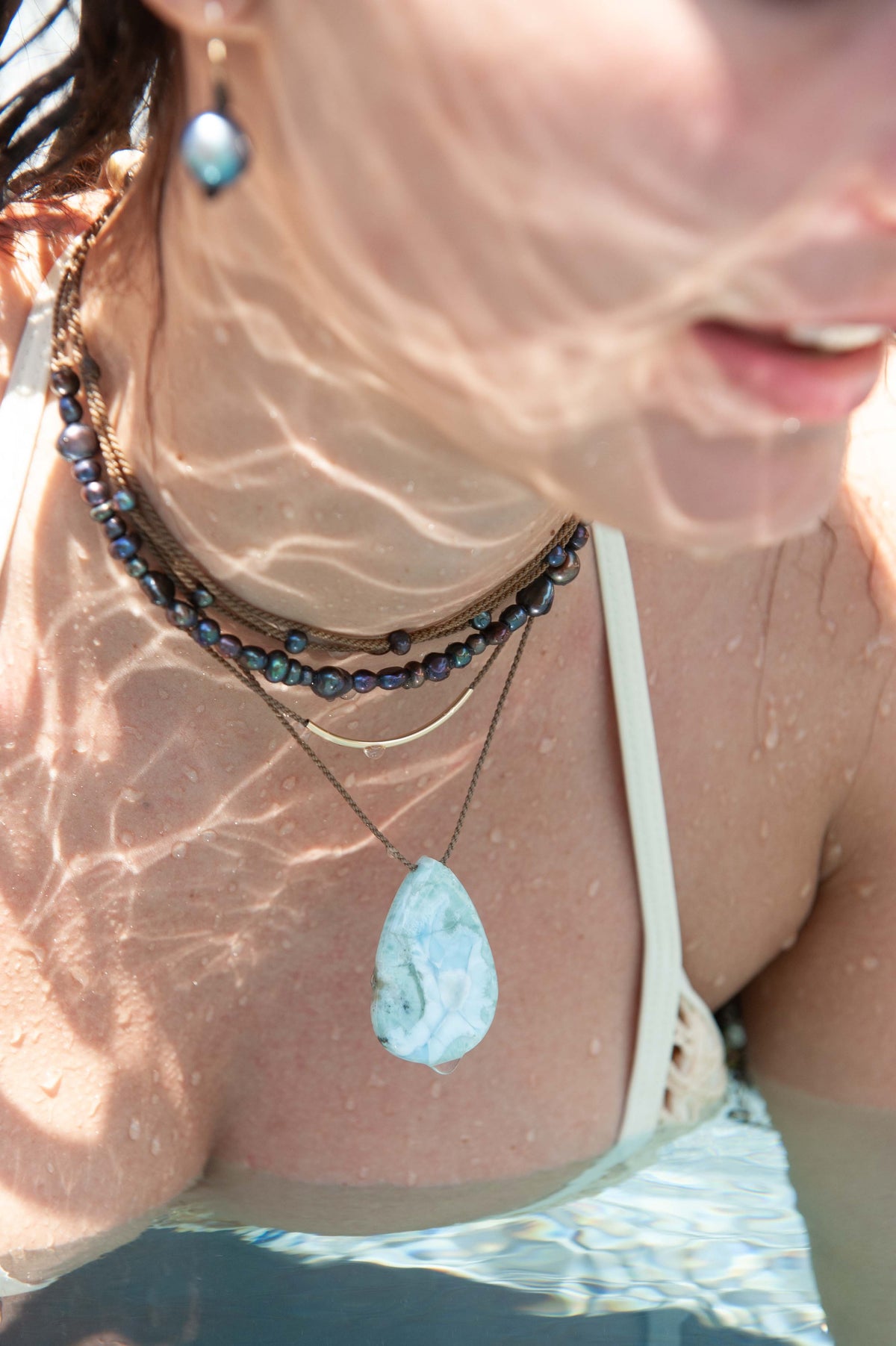
Every finish above starts with a metal that can wear, react, or tarnish. Hand-spun rope starts with none. The Everyday Pearl Necklace is real freshwater pearls strung and knotted right on the rope. No chain. No glue. No clasp, just a loop and a puka shell. The Riptide Pearl Bracelet is three strands of rope and a sliding knot. Nothing underneath can show through, because nothing is underneath.
Our metal-free jewelry collection has pearls, stones, and shell on rope. A few of our pieces add a small metal accent bead, and the product page always says so. No Tula Blue piece has plated parts, anywhere.
Does gold plated jewelry tarnish?

The gold itself doesn’t. The metal underneath does, once friction at the clasp, the edges, and every spot that rubs your skin wears the layer thin. Under the Guides, gold plate is a gold alloy of at least 10 karat applied over another metal, an electroplated layer only has to equal 0.175 microns of pure gold, and heavy gold electroplate has to equal 2.5 microns of pure gold. A lower-karat layer has to be thicker to make up the difference.
Copper in that base metal reacts with sweat and water, and that reaction is what leaves the green. A Nebraska Medicine dermatologist calls it harmless and says it washes off, which is true and still not what you wanted from a gift. Jewelers commonly warn that pool and ocean water speed the wear along.
“I love the material that is used because I can get it wet and not worry about my wrist turning green from copper”
Julie M., Tula Blue customer
Gold vermeil vs gold filled: what’s the difference?

Vermeil sits between plating and gold-filled. The FTC says it must be sterling silver coated with at least 10 karat gold, with a thickness equal to at least 2.5 microns of pure gold, a much heavier layer than basic plating. Gold-filled is measured by weight instead, at least one-twentieth of the whole piece’s metal weight, mechanically bonded over a base metal, so the two can’t be converted into each other. Vermeil’s weak point is what sits underneath: when the gold wears, sterling shows, and sterling tarnishes.
Is gold-filled waterproof?
No. Gold-filled is water-resistant, and in the gold-filled vs. gold-plated comparison, it wins on durability because the layer is thick enough to survive daily wear. The outside is real karat gold, which suits a necklace you shower in now and then. It is still a layer over a base metal, so rinse it in fresh water after the pool or the ocean and dry it. Like any finish, it can wear at high-contact points over time, but with normal wear it is usually fine. You’ll often see 1/20 14K GF stamped on it, which is common practice, since the Guides only require the karat.
What is PVD jewelry, and what does the coating do?

PVD stands for physical vapor deposition. A coating material is vaporized in a vacuum and settles onto the piece as a thin film. Most PVD coating jewelry is stainless steel underneath, and the gold color often comes from a compound like titanium nitride, which is gold-colored without being gold. Stainless steel is naturally silver-gray, so the color you see on a PVD piece is the coating, not the metal, and coatings wear.
Is PVD jewelry waterproof?
PVD jewelry is highly water-resistant. Stainless steel resists rust, and the film is built for wear, which is why PVD gold jewelry and PVD stainless steel jewelry handle showers and pools well. The steel underneath handles the water. The color on top is the part that changes over time. For a pool day, it is a reasonable choice.
Does PVD coating wear off?
Yes, eventually, and when it does, the color of your piece changes. With normal wear, it is usually fine. The color is the coating, so where the piece rubs, at clasps, edges, and the underside of rings, the coating thins and the silver-gray steel shows through. It can also lighten before that happens. A 2023 lab study of decorative coatings found their corrosion resistance dropped after 96 hours in artificial sweat. The FTC Guides don’t mention PVD at all, so ask what the base and the coating are made of. For the bigger picture on rope vs coated metal, see best waterproof jewelry brands in 2026.
PVD vs solid gold
PVD vs solid gold comes down to where the gold is. PVD gold is a thin surface film on steel, while solid gold is gold alloy all the way through, so there is nothing to wear off. Solid gold is the better long-term choice for water, and PVD on stainless is a reasonable middle ground for a pool day.
Where PVD shines
PVD-coated stainless steel is a good choice for an affordable gold look. The steel base resists rust, the coating is hard, and it comes in many colors, from gold and rose gold to black. For showers, pools and everyday wear, it is a reasonable pick when you know what you are buying.
What to ask before you buy PVD jewelry
Ask what the base and the coating are made of. The FTC Jewelry Guides don’t define PVD, so the label won’t tell you. Here is what each answer means.
Swipe sideways to see the whole table.
| Ask about | If it is | What it means |
|---|---|---|
| The base | Stainless steel (316L or 304) | Resists rust. 316L is the top pick. Worn spots show silver-gray steel. |
| The base | Titanium | Light and corrosion resistant. Worn spots show gray. |
| The base | Brass or copper | If the coating wears, the base can tarnish or leave a green mark on skin. |
| The base | Not stated | Ask. You cannot judge how it will wear without it. |
| The coating | Titanium nitride | The standard. A gold-colored hard ceramic with no gold in it. |
| The coating | Zirconium nitride | Pale gold or champagne ceramic with no gold in it. Suppliers say it resists corrosion a bit better. |
| The coating | Other nitrides or carbon coatings | Rose gold, black, silver, blue and bronze tones. |
| The coating | Real gold applied by PVD | Possible but uncommon. Ask the karat and thickness. |
| The coating | Not stated | Ask. “Gold-tone” or “gold-colored” is the honest label. |
Good to know
- The top pick. 316L stainless steel with a titanium nitride or zirconium nitride coating is the most recommended pairing. That comes from coating suppliers, and we found no independent test that ranks the combinations.
- Thickness counts. Coating thickness and how well the piece was prepared matter as much as the compound itself. A cheap application of the best coating can wear faster than a good application of a lesser one.
- Wear is gradual. A lab study found decorative coatings lose some corrosion resistance in sweat over time, so best means slower wear, not forever.
- The label may not tell you. Many brands don’t say what the base and the coating are, which is why you ask.
- Still a good pick. For an affordable gold look that handles water, PVD-coated stainless steel is hard to argue with when you know what you are buying.
Waterproof gold jewelry: what stays gold in water
The word waterproof has no FTC definition, so what matters is what sits under the gold. Real gold waterproof jewelry means solid gold, because there is no layer to lose and nothing underneath to react, and gold-filled is the closest runner-up with a rinse after water. For gold jewelry you can swim in, solid gold is the safest choice. Yellow gold at 18 karat or higher is also what dermatologists list for nickel-sensitive skin, and jewelers do warn that chlorine is hard on lower-karat alloys. If you’d rather skip the question, there is a route with no metal at all: metal-free jewelry made on hand-spun rope.
Every coated option stays gold until the coating wears, and that is the line between the finishes above. Sterling silver isn’t gold, but it is the base under vermeil, so it belongs here: chlorine, salt, and sweat speed its tarnish, and a polishing cloth lifts it off.
Tarnish-free jewelry: what qualifies

Non-tarnish jewelry means nothing in it reacts with air, sweat, or water. Pure gold doesn’t tarnish, and any dulling on gold jewelry comes from the other metals mixed into the alloy. Platinum, titanium, and surgical-grade stainless steel resist it well, and sterling silver tarnishes by nature, since silver reacts with sulfur in the air. Anything plated or PVD-coated counts as tarnish-free until the coating wears through to the base metal.
Tarnish-free jewelry that stays that way has no reactive metal at all, and that is where rope sits. Our full guide to jewelry that doesn’t tarnish walks through each material.
“I love that I never have to take it off. It doesn’t tarnish or turn colors at all”
Melissa V., Tula Blue customer
Where hand-spun rope fits


Tula Blue pieces are handmade in Texas from hand-spun, nautical-grade rope, the kind made for boats and salt water. With no metal in the rope, there is nothing to plate, nothing to flake, and nothing to react with sweat, so the rope never tarnishes and never leaves a green mark. That makes it waterproof jewelry that won’t tarnish. Why rope jewelry walks through how that works, and our waterproof rope jewelry collection is where it lives.
“I love the fact that I can wear the jewelry whether I am at the beach, on a boat out in the Gulf fishing, at the lake, showering, exercising, without taking it off or worrying about it tarnishing, discoloring, or leaving a green stain on my neck.”
Carol, Tula Blue customer
Rope has limits too. Like any rope, it can be cut, and long stretches in highly chlorinated hot tubs are hard on pearls, since GIA notes chemicals and perspiration can damage them.
Three quick tools before you buy
How to tell if jewelry is gold-filled or gold-plated
- ☐ A karat number sits right before the word gold (14K, 18K). No number, no way to know what you’re buying.
- ☐ The listing says gold-filled, gold-plated, vermeil, or solid. “Gold tone” and “gold layered” aren’t defined by the FTC, so ask what sits under them.
- ☐ Gold-filled is commonly stamped 1/20 14K GF. Vermeil should name sterling or 925.
- ☐ PVD listings should name the base, usually stainless steel, and the coating.
- ☐ Waterproof has no FTC definition, so look for what it’s made of and how it’s guaranteed.
Pick your piece by your week
| If your week includes | Look at |
|---|---|
| Showers, pool laps and the ocean | Hand-spun rope, like the Riptide Pearl Bracelet |
| Sensitive skin or a nickel allergy | Metal-free rope jewelry, plus our sensitive skin guide |
| A gift for someone whose habits you don’t know | The Everyday Pearl Necklace, nothing to baby |
After the pool or the ocean
- ☐ Rinse in fresh water after salt or chlorine.
- ☐ Pat dry and let it air out.
- ☐ Use a polishing cloth on sterling silver.
- ☐ Keep pearls out of highly chlorinated hot tubs.
Tula Blue guarantees the rope for life, and covers pearls, stones, and other parts for 365 days.
Jewelry you never have to think about
If you’d rather not think about finishes, rinses and polishing cloths at all, our waterproof jewelry is hand-spun rope made to go from the shower to the pool to the ocean and back to dinner without ever coming off, and the everyday waterproof jewelry guide helps you pick where to start.


Leave a comment
This site is protected by hCaptcha and the hCaptcha Privacy Policy and Terms of Service apply.