

Article: Hypoallergenic Jewelry: The Metal-Free Answer

Hypoallergenic Jewelry: The Metal-Free Answer
Most jewelry that calls itself hypoallergenic is still metal. It's just metal with a coating on top, and coatings wear off. The only jewelry that can't cause a metal reaction is jewelry with no reactive metal against your skin at all, and that's a much smaller category than the label suggests.
Search "hypoallergenic jewelry" and you'll mostly find the same thing over and over: nickel-free plating, hypoallergenic-coated posts, surgical steel that's steel until it isn't anymore. None of it addresses the actual problem, which is that a coating is a temporary fix on a permanent material. Tula Blue's answer isn't a better coating. It's hand-spun nautical-grade rope, which has no metal in it to react with anything.
That's true for most of what we make. It's not true for every single piece, and we'd rather tell you exactly where the line is than let you assume something we can't back up.

What "Hypoallergenic" Actually Means (and Why It's Not the Same as Metal-Free)
A nickel allergy isn't rare. More than 18% of people in North America react to nickel, including 11 million children in the U.S., according to the American Academy of Dermatology. That's the most common cause of allergic contact dermatitis from jewelry, and it's why so many brands slap "hypoallergenic" on the label.
Here's the problem. "Hypoallergenic" and "nickel-free" usually describe a coating, not the metal underneath. A piece gets plated in something gentler, rhodium, gold, a nickel-free alloy, and that plating does its job for a while. Then it wears. DermNet NZ puts it plainly: the coating will eventually wear off and need re-plating. Once it does, the base metal underneath, often a nickel alloy chosen because it's cheap and durable, is back in direct contact with your skin. The reaction shows up months after you bought a piece that was marketed as safe, and most people never connect the two.
Metal-free rope skips that problem entirely. There's no coating because there's nothing underneath the coating to protect. The rope is the material, start to finish, so there's nothing for a reaction to happen to.
|
Metal-Free Rope |
Nickel-Free Coated |
Uncoated Base Metal |
|
|---|---|---|---|
|
What touches your skin |
Rope only |
Coating, then base metal once it wears |
Base metal, always |
|
Reaction risk over time |
None from the material |
Rises as coating wears |
Present from day one for sensitive skin |
|
Needs re-treatment |
No |
Yes, periodically |
No, but risk stays constant |
Signs You're Reacting to Metal, Not Something Else
A metal reaction usually shows up as redness, itching, or a rash exactly where the metal touched your skin, often on the earlobe, wrist, or neck. It can appear anywhere from a few hours to a few days after contact, according to Mayo Clinic. If a piece you've worn for months suddenly starts to bother you, that's usually the plating wearing through, not a new allergy showing up out of nowhere.

Necklaces You Can Wear Without a Second Thought
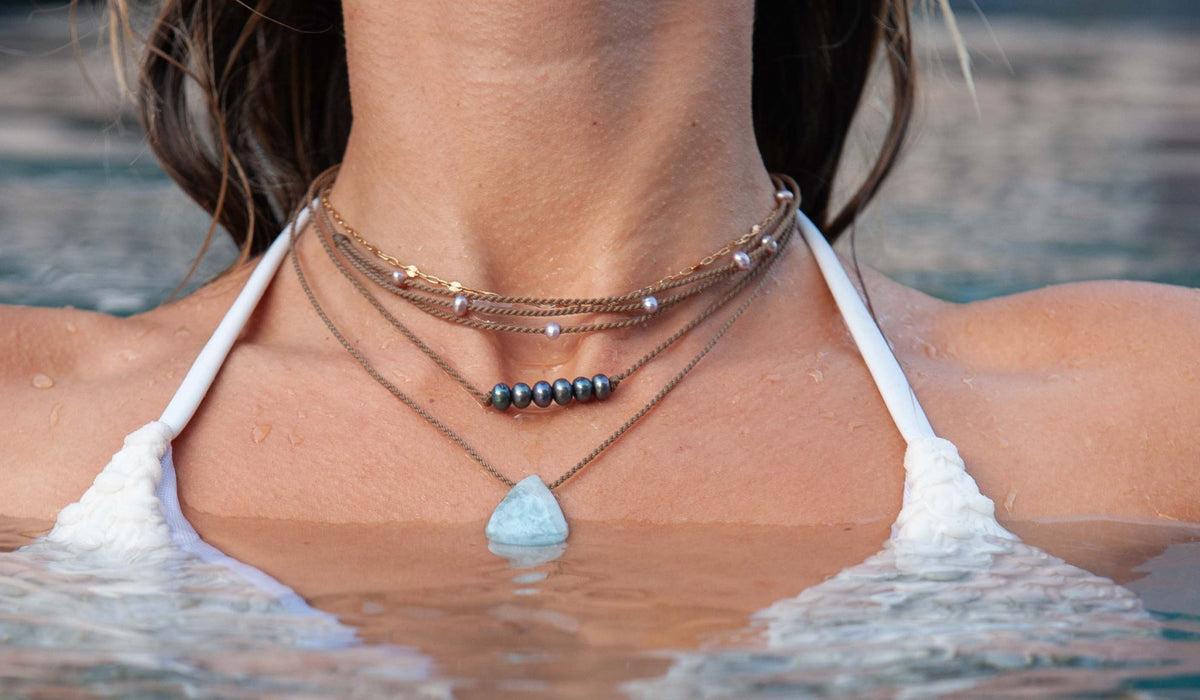
Most Tula Blue necklaces are pure rope, strung with freshwater pearls or natural stones and nothing else touching your neck. The Everyday Pearl necklace is the clearest example, hand-spun rope carrying real freshwater pearls, no chain, no clasp, no metal setting behind the pearl. We also make a handful of necklaces with a 14k gold-filled bar accent for people who don't have a metal sensitivity and want that look. Those are marked clearly on the product page so you're never guessing which is which.

Bracelets Built With Nothing to React To
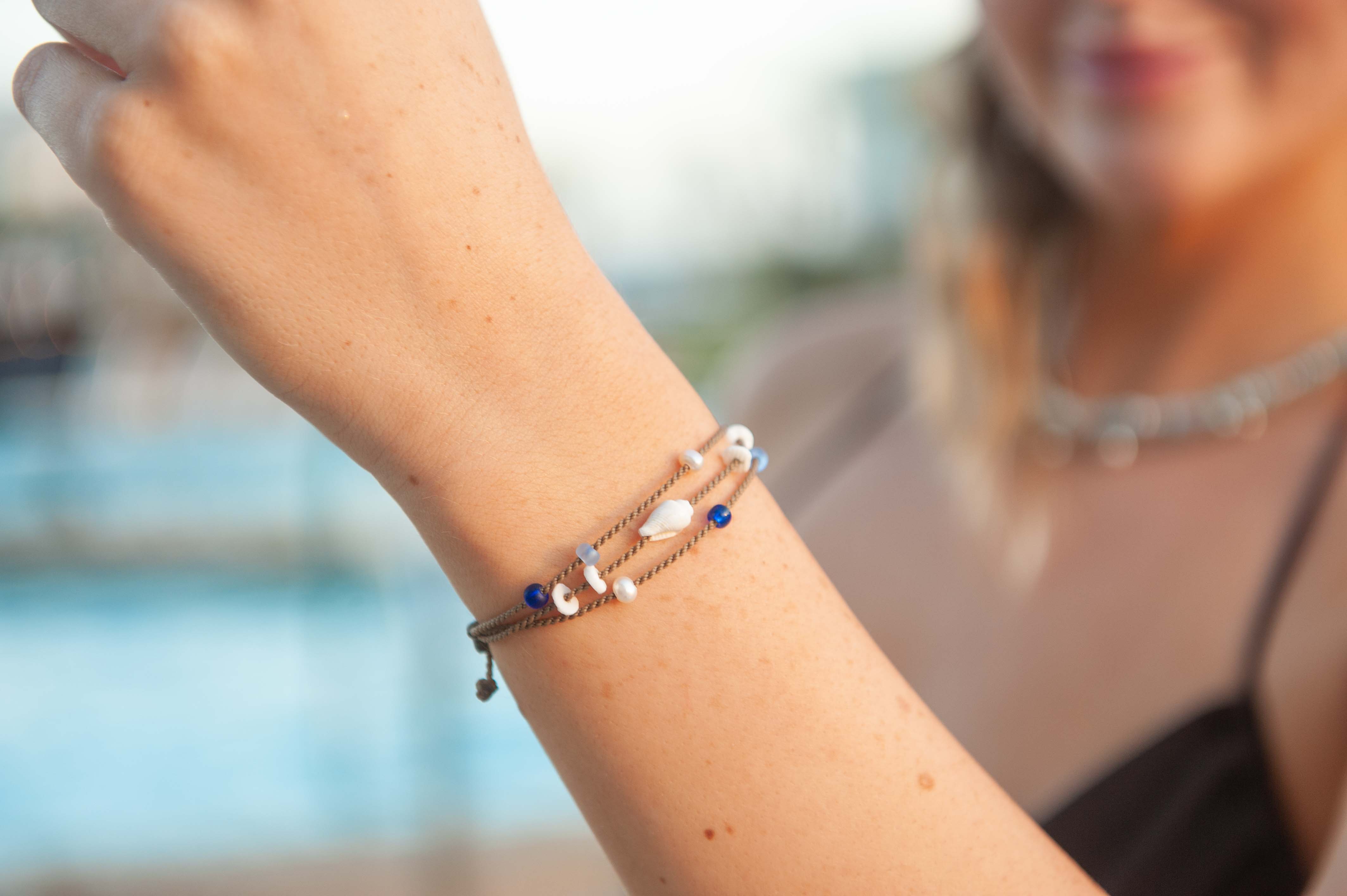
Bracelets sit against the wrist all day, through workouts, dishes, and sleep, which makes them one of the most common places a nickel reaction shows up. The Everyday Pearl bracelet and the rest of Tula Blue's rope bracelets are rope from the knot to the stone. The sliding knot closure that makes them adjustable is rope too, not a metal clasp. As with necklaces, a small number of bracelet styles carry a gold-filled bar accent as an elective option, never the default.

Anklets, the One Category That's Fully Metal-Free
Every anklet Tula Blue makes is metal-free, no exceptions. It's the one category where you don't have to check the product page twice. Anklets get more direct, sustained skin contact than almost anything else you wear, through sand, sweat, and salt water, and they're finished with a standard 10-inch length rather than a metal clasp. If you're shopping for a nickel allergy and want the simplest possible decision, the Everyday Pearl anklet and the rest of the anklet line are it.

Rings, Metal-Free When You Choose the Right Style
Tula Pearl Rings come in two designs, Crown and Triple, and the style you pick determines whether metal is involved. The plain Crown style and the Triple style are both rope and pearl only, no metal setting anywhere in the piece. Crown w/ Gold and Crown w/ Silver, on the other hand, add a metal crown setting around the pearl, so those two are not metal-free. If a ring needs to be fully metal-free for you, Crown or Triple is the choice, not an assumption to make about the whole ring line.

Earrings, the One Honest Exception
Here's where we tell you the thing most brands leave out. Earrings need a post or a hook to go through the ear, and rope can't do that job. Tula Blue's earring posts are solid sterling silver or solid 14k gold-filled, never plated, never coated.
That matters more than it might sound. A plated post wears through to expose whatever cheap alloy is underneath, usually within months. A solid sterling silver or solid gold-filled post has nothing to wear through to. There's no hidden base metal waiting to show up later. Sterling silver and high-karat gold are also two of the metals dermatologists most often recommend to people managing a nickel allergy, alongside titanium and surgical-grade stainless steel, according to Mayo Clinic. So while our earrings aren't metal-free the way our anklets are, they're built from the two metals least likely to cause a reaction in the first place, and there's no coating hiding a worse metal underneath.
If you have a documented nickel allergy and want zero metal anywhere on your body, our earrings collection is worth a conversation with your dermatologist first. If your sensitivity is specifically to nickel, sterling silver and 14k gold-filled are typically the safer path, not a gamble.
The Real Answer
A hypoallergenic label tells you what a brand hopes will happen. A material tells you what actually will. Rope doesn't react because there's nothing in it to react with, not because it's been treated to behave for a while. That's the difference between a workaround and an answer.
If you're shopping for nickel allergy jewelry, whether for yourself or someone with a known sensitivity, start with the Metal-Free Jewelry collection, where every piece is rope from the skin out. And if you want the fuller picture on sensitive-skin jewelry beyond nickel specifically, our guide to metal-free rope jewelry for sensitive skin goes deeper.



Leave a comment
This site is protected by hCaptcha and the hCaptcha Privacy Policy and Terms of Service apply.