

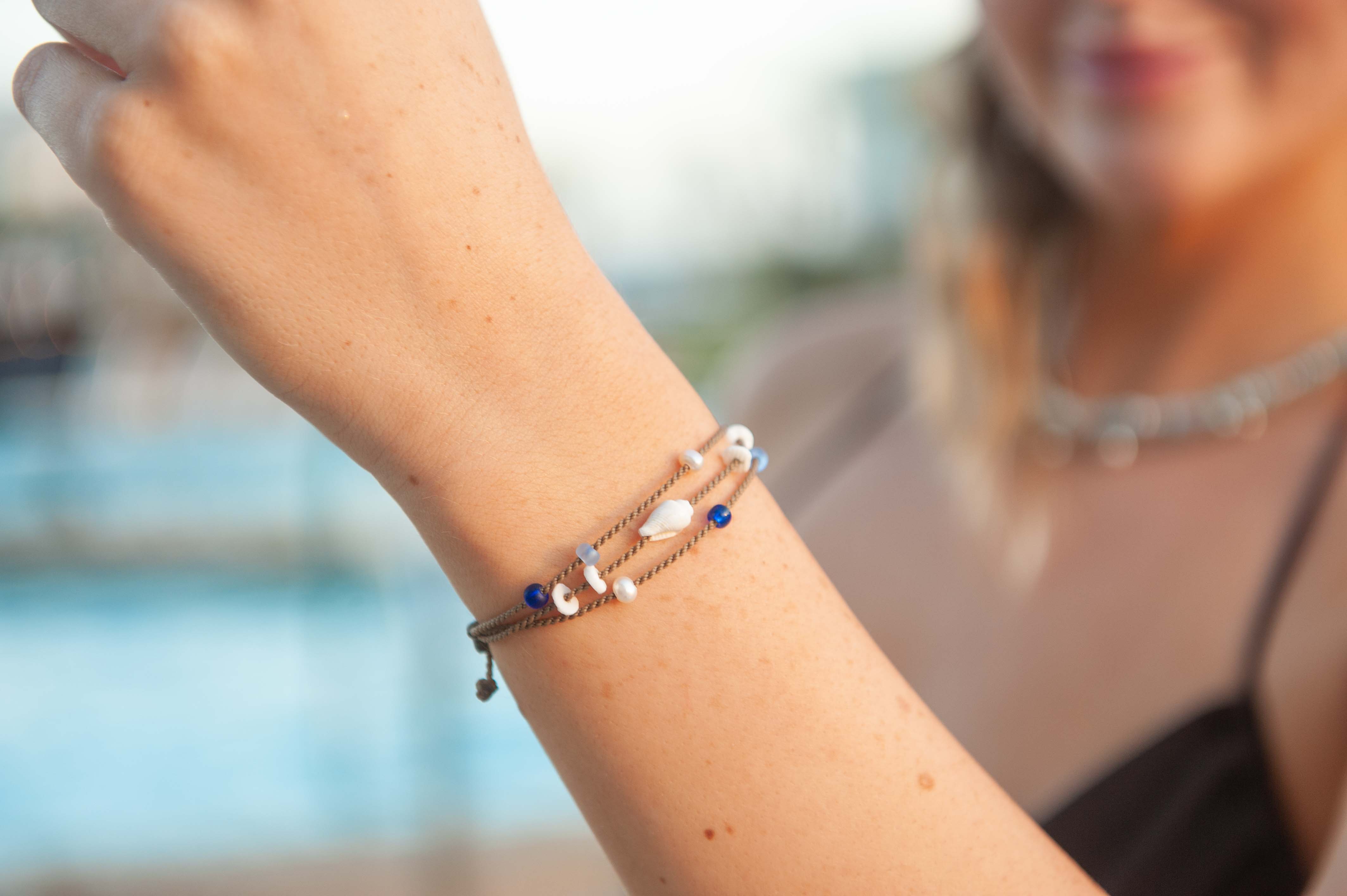
Article: Can You Wear a Pearl Necklace in Water?
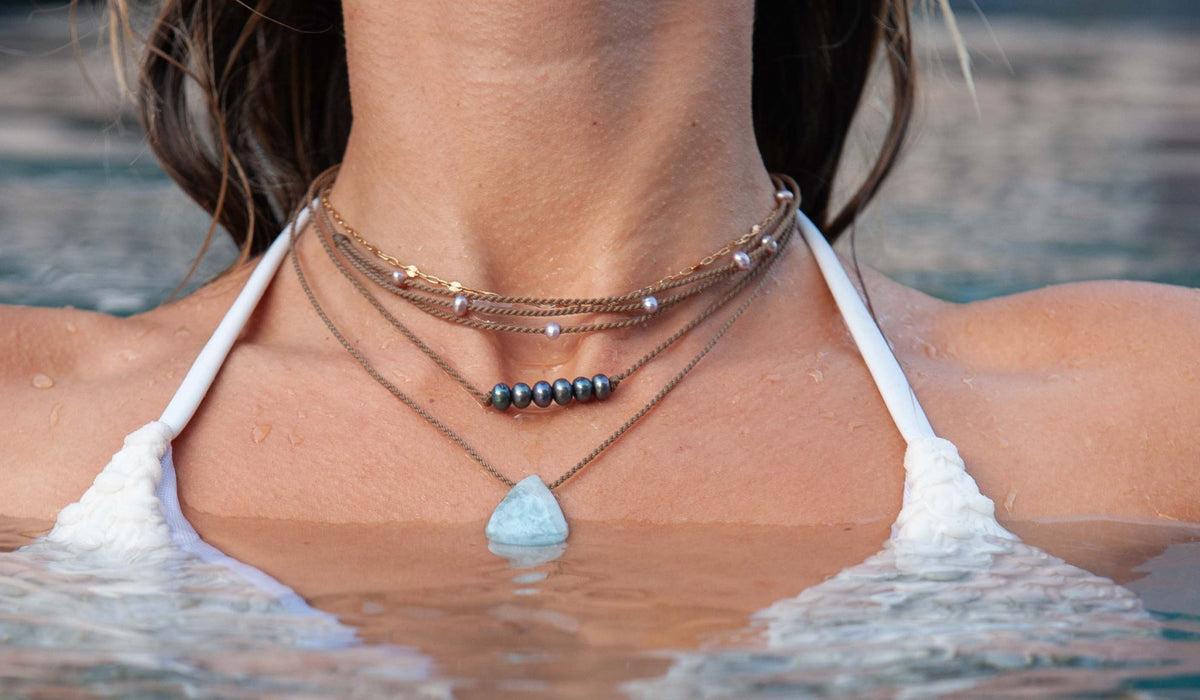
Can You Wear a Pearl Necklace in Water?
Yes, a real pearl necklace can go in water, if it's built the right way. Most pearl jewelry can't handle water because of what holds the pearl in place, not the pearl itself. Silk stringing rots. Metal clasps corrode. A pearl necklace strung on rope has neither problem, so it goes in the shower, the pool, and the ocean without a second thought.
Every pearl care guide says the same thing. Take them off before water touches them. No pool, no ocean, no shower. It is the most repeated rule in jewelry care, and it has been true for as long as pearls have been strung on silk and clasped in metal.
It is also incomplete. Tula Blue necklaces use genuine cultured freshwater pearls, the real thing, not a sealed shell bead made to look like one. What changes isn't the pearl. It's everything the pearl is attached to.

What Damages a Pearl
A pearl is not stone. It is nacre, layer after layer of it, built by a mussel over months. According to GIA, pearl ranks 2.5 on the Mohs hardness scale, soft enough to scratch or wear down with the wrong kind of contact. That softness is real, and it is also the part most water warnings get wrong.
Plain water is not the threat. Chlorine is. Saltwater is, if it dries on the surface without a rinse. Soap, shampoo, and the acids in sweat and perfume are too. A quick swim or a shower does not ruin a pearl on its own. Repeated exposure to what is dissolved in that water, without ever rinsing it off, is what dulls the shine over time.
This is why a customer like Sandra W. can wear her Everyday Pearl Necklace continuously through work, through workouts, through sleep, for weeks straight, and still describe it as looking brand new. The pearl was never the fragile part. The construction around it was.

The Setting Is the Real Story
Traditional pearl strands are knotted between each pearl on silk thread. Silk absorbs water, stretches, and eventually snaps, which is why fine jewelers recommend restringing a well-worn strand every year or two. Plated metal clasps and settings face their own version of the same problem. Coatings wear thin at the point where metal meets skin, and once that happens, the piece is done holding up its end of the bargain.
Rope carries none of that risk. Every Tula Blue pearl necklace is hand-tied to nautical-grade rope, the same material used to secure rigging on sailboats. There is no silk inside to rot. There is no metal clasp to corrode. The rope is guaranteed for life, so the pearl is never waiting on a setting that's wearing out underneath it. The rope gets out of the way, and the pearl finally gets to shine.
Pearls are born in water. Now they get to go back in.
|
Construction |
What Fails |
Restringing Needed |
|---|---|---|
|
Silk thread |
Rots, stretches, snaps |
Every 1-2 years |
|
Plated metal clasp |
Coating wears at skin contact |
When plating fails |
|
Nautical-grade rope |
Nothing, no silk or metal present |
Guaranteed for life |

Real Freshwater Pearls, Tested in Real Water
This isn't a claim made from a lab. Customer Carol A. wore her Tiny Triple Pearl Anklet through a full month of saltwater, freshwater, and pool swims and reported it still shining like new. Freshwater pearl anklets get some of the hardest water testing in the whole Tula Blue line, since they go straight into the ocean and the pool on repeat, and they hold up the same way the necklaces do. See the full lineup of waterproof pearl pieces for how each one handles water.

How to Keep Any Pearl Piece Looking Its Best
A rope-strung pearl necklace does not need babying, but a little care keeps any piece looking its sharpest for years.
-
Rinse with fresh water after a swim in the ocean or a chlorinated pool. A few seconds under the tap is enough.
-
Let it air dry completely before storing it. Lay it flat rather than balling it into a drawer.
-
Skip the airtight bag. Pearls hold up better with a little humidity around them than sealed away in plastic.
-
Wear it. Pearls look better with regular contact against skin than they do sitting untouched for months.
None of that is specific to Tula Blue. It is simply how real pearls, on any material, stay looking their best. What is specific to Tula Blue is that the necklace never has to come off to follow that advice.

Ready to Wear Pearls and Never Take Them Off?
The Waterproof Jewelry collection is built on the same nautical-grade rope in every piece, and the Everyday Pearl Necklace is the easiest place to start if you want a real pearl necklace you can swim in without a second thought.



Leave a comment
This site is protected by hCaptcha and the hCaptcha Privacy Policy and Terms of Service apply.