

Article: Tarnish-Free Jewelry: The Buying Guide They Won't Write
Tarnish-Free Jewelry: The Buying Guide They Won't Write
Tarnish-free jewelry falls into two real categories: PVD-coated stainless, which resists tarnish for a few years before the coating wears through, and genuinely metal-free materials like nautical-grade rope, which have nothing on the surface left to tarnish at all. Both are legitimate. They are not the same promise, and no honest guide should tell you they are.
You've probably read three versions of this article already. Same list of brands, same checklist, maybe a "top pick" banner dressed up as editorial. Search "non tarnish jewelry" and most of what comes back reads like the same three sentences copied from brand to brand, with no real answer for what happens to any of these pieces a year in. What they leave out is that most jewelry sold as tarnish-free is still metal, just metal wearing a very good coat.
That's not an insult. The coating is real technology and it works, for a while. It wears, because that's physics, not a brand failing you.
Two real paths to jewelry that resists tarnish. What each one actually does over years of wear. And how to tell which fits how you live.
What "Tarnish-Free" Actually Means
Tarnish happens when metal reacts with oxygen, sulfur, or the chemistry in your own sweat and skin oils. Sterling silver reacts with sulfur compounds to form silver sulfide, the dark film you scrub off with a polishing cloth. Sweat, perfume, and even hormonal changes can speed up that reaction. Gold alloys tarnish slower because pure gold barely reacts, but almost no fine jewelry is pure gold. It's alloyed with copper, silver, or nickel to make it strong enough to wear, and those added metals are what darken over time.
"Tarnish-free," used accurately, is a claim about resistance, not immunity, unless the material has nothing on the surface left to react. That distinction is the whole buying decision, and it's the one most guides skip.
The Two Paths, and What Actually Separates Them
Path one is coated metal. A base metal, almost always 316L stainless steel, gets a microscopically thin layer of titanium or gold bonded to the surface through a vacuum process called PVD, physical vapor deposition. It resists tarnish and scratching far better than old-style electroplating. It's still a coating, sitting on top of a metal that will eventually show through once that layer wears thin.
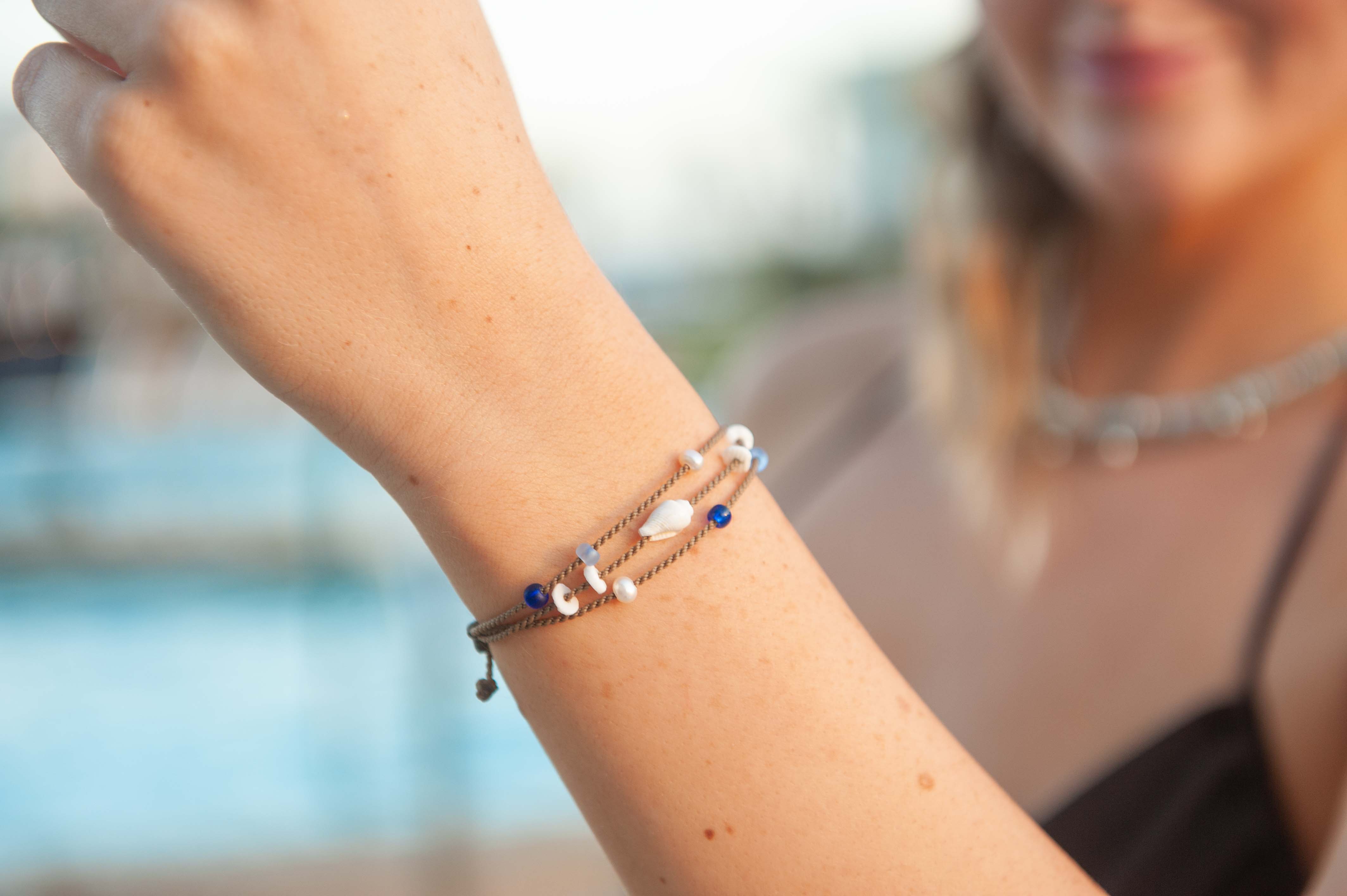
Path two is metal-free. Nothing on the surface can tarnish because there's no metal there to react. Tula Blue's rope pieces work this way. The rope itself, hand-spun from nautical-grade line, never tarnishes because tarnish is a metal reaction and rope isn't metal. Some pieces carry a metal bar accent, and that piece can patina like any metal does. The rope holding the piece together does not.
Neither path is a scam. They're built for different tolerances, and knowing which one you're buying changes what you should expect a year in.
PVD-Coated Stainless: What It Actually Does Over Time
Three brands worth naming here, because all three are worth being accurate about. Atolea builds from recycled 316L stainless with an 18K gold PVD coating and backs it with a Lifetime Color Warranty, though the customer covers return shipping if a piece needs replating. Louise Carter uses 14K gold PVD over 316L stainless and sells in stacking-forward multi-piece bundles built around volume. Hey Harper discloses a 2-micron PVD coating over stainless steel and calls "14K" a color description, not a gold content claim, backed by a Lifetime Color Warranty paid out in store credit or replacement rather than cash, plus a separate 6-month breakage warranty. Hey Harper is also upfront that its jewelry isn't hypoallergenic, since the alloy includes a small percentage of nickel, worth knowing if sensitive skin is part of why you're shopping tarnish-free in the first place.
Independent testing on PVD coatings shows a typical lifespan of three to five or more years of daily wear before the coating starts to thin, with salt-spray tests holding up 100 to 500-plus hours before oxidation begins to show. That's a real, measurable improvement over old gold plating, which can develop spots within days. It's also not permanent. A ring worn daily, rubbing against everything your hands touch, wears faster than a bracelet or necklace that sees less friction.
Here's how all three named brands stack up against Tula Blue's rope pieces on what actually matters:
|
Atolea |
Louise Carter |
Hey Harper |
Tula Blue Rope |
|
|---|---|---|---|---|
|
Base material |
Recycled 316L stainless steel |
316L stainless steel |
Stainless steel, grade undisclosed by the brand |
Nautical-grade rope, hand-spun |
|
Surface treatment |
18K gold PVD coating |
14K gold PVD coating |
2-micron PVD coating, "14K" describes color only |
None, rope is the material |
|
What can tarnish |
Coating wears, base metal can show through |
Coating wears, base metal can show through |
Coating wears, base metal can show through |
Nothing on the rope itself |
|
Typical coating lifespan |
Several years, warranty-backed |
Several years |
Several years, warranty-backed |
Not applicable, no coating |
|
Hypoallergenic |
Not claimed |
Not claimed |
Explicitly NOT claimed, contains some nickel |
Genuinely metal-free, nothing to react |
|
Water safety |
Generally water-resistant |
Generally water-resistant |
Generally water-resistant |
100% waterproof, made for it |
|
Buying structure |
Individual pieces, warranty included |
Stacking bundles |
Individual pieces plus a monthly subscription box |
Individual pieces, made in Texas |
|
What replacing it involves |
Return shipping for replating |
Repurchase |
Store credit or replacement, no cash refunds |
Nothing, there's no coating to replate |
Worth giving credit where it's due: Atolea building on recycled 316L stainless is a real sustainability plus, not a marketing flourish. Recycled steel takes less energy to produce than virgin stainless, and it's the kind of detail that gets buried under bigger claims about color and shine. It doesn't change the coating math. It does mean the base material choice, at least, is a genuinely good one.
None of this makes PVD a bad choice. If you want the exact look of solid gold at a fraction of the cost and don't mind budgeting for a replace-or-replate cycle every few years, it's a reasonable trade. It's just a different trade than buying something with nothing to wear through in the first place.
What to Look for When Comparing Tarnish-Free Jewelry Brands
Most tarnish free jewelry brands lead with the same three claims: the coating is thick, the price is fair, and the color lasts. None of those claims tell you much on their own. What actually separates a good buy from a disappointing one comes down to four questions worth asking before you check out anywhere.
What's the actual base metal underneath the coating, and is it named specifically or just described as "premium alloy"? Brands that disclose 316L stainless by name, the way Atolea and Louise Carter both do, are being straightforward about what you're really buying. Is there a warranty, and what does it actually cover, replating, a full replacement, or nothing once the color starts to go? Does the brand disclose coating thickness or testing data anywhere, or just a marketing claim that it "never fades"? And is pricing structured per piece or bundled, since bundle pricing usually signals a stacking strategy built around buying more, not necessarily better value per piece.
None of this makes one structure automatically the right one. Whatever list claims to name the best tarnish free jewelry 2026 has to offer, the real answer isn't decided by which name shows up first in a sponsored post. It's decided by which material actually matches how long you want to keep wearing it without thinking about it.
Do the math on what that actually costs over time. A single PVD-coated piece needing replating or replacement every three to five years adds up differently than a piece with no coating to plan around at all. Neither math is wrong. It's just math worth doing before you buy, not after the color starts to fade.
Genuinely Metal-Free: How Rope Sidesteps the Problem Entirely
The rope never tarnishes. That's a material fact, not a marketing line. Tarnish is a chemical reaction between metal and its environment, and rope has no metal surface for that reaction to happen on. Swim in it, sweat in it, sleep in it, and the rope looks the same on day 900 as it did on day one.
Carol A. wrote in her review of the Tiny Triple Pearl Anklet: "After a month of consistent wear in saltwater, freshwater, and pools, this piece still shines like it's brand new." That's the difference in practice, not theory. She put it on, lived her life, and it looked the same a month later.
Every rope piece starts on a spinning wheel at either the Island Workshop in Corpus Christi or the Tula Treehouse in West Austin, hand-spun by one of the nearly 20 women who make Tula Blue jewelry, not machine-extruded overnight in a factory somewhere neither of us has been. That's part of why the rope holds up the way it does. It's built the same way real dock line and rigging rope is built, just scaled down and dressed up.
The honest caveat, the same one we'd tell you about our own pieces: any piece with a metal bar accent can patina over time the way any metal does, and pearls held against highly chlorinated hot tubs for long stretches will show wear faster than in a pool or the ocean. Nothing here claims to be indestructible. It claims to be honest about what actually holds up, which is the entire reason this material exists in the first place, made by hand in Texas from rope built to survive actual saltwater, not a lab test standing in for it.
How to Choose Based on How You Actually Live
If you love the exact look of polished gold and don't mind budgeting for a replating or a repurchase every few years, PVD-coated stainless from a brand like Atolea, Louise Carter, or Hey Harper is a fair, well-made option built for that cycle. That's a real answer, not a consolation prize.
If you'd rather stop thinking about your jewelry entirely, put it on and never plan around it, a genuinely metal-free piece removes the question from the equation. No coating to track, no timeline to watch, nothing to replace when it wears thin.
Either way, know what you're actually buying, and a coating is still a coating, even a very good one.



Leave a comment
This site is protected by hCaptcha and the hCaptcha Privacy Policy and Terms of Service apply.