

Jewelry That Doesn't Tarnish: Why the Real Answer Isn't a Better Metal
The only jewelry that truly cannot tarnish is jewelry with no metal in it. Tarnish is a chemical reaction between metal and the air, sweat, and water around it. Among metals, platinum, high-karat gold, titanium, and surgical stainless resist it best. Hand-spun rope, freshwater pearls, sea glass, and natural stone have nothing to oxidize at all.
You've probably already had this conversation with a piece of jewelry. It looked perfect in the box, and three weeks later it's gray at the clasp or green on the back of a ring, and you're standing in the bathroom wondering if it's worth cleaning again or just done. So you go looking for everyday jewelry that won't tarnish, jewelry that doesn't tarnish at the beach, anything that survives real life, and end up in the same aisle you started in, just with a different metal name attached to it. Stainless instead of silver. Gold-filled instead of plated. Still metal, still something that can eventually react.
Here's the part almost nobody selling you jewelry wants to say plainly. Tarnish isn't a manufacturing defect or a sign you bought something cheap. It's chemistry, and it's happening on a schedule you didn't set. So the real question isn't which metal tarnishes slowest. It's whether there's a metal there to react at all. If you'd rather skip straight to the pieces that solve this, shop waterproof jewelry built with nothing to tarnish in the first place.

What's Actually Happening When Jewelry Tarnishes
Tarnish looks like dirt, but it's a surface reaction, not a stain you can wipe away for good. Silver tarnishes when it reacts with hydrogen sulfide in the air, forming a black layer of silver sulfide, and copper tarnishes when it meets oxygen and moisture, creating a greenish copper oxide. Sterling silver is an alloy of 92.5 percent silver and 7.5 percent copper, and the copper is what reacts fastest, which is why higher-copper alloys tarnish faster than purer ones.
Sweat speeds all of this up. So do perfume, chlorine, and humidity, which is exactly why the same necklace tarnishes faster on someone who works out daily than on someone who wears it to dinner twice a month. It was never about how "good" the jewelry was. It was about how much life it was living.

The Metals That Resist Tarnish Best (An Honest List)
If you're going to buy metal, some options hold up better than others, and we'd rather tell you the truth than pretend rope is the only answer on earth.
- Platinum resists tarnish extremely well and tends to develop a soft patina over decades rather than a dark film.
- High-karat gold (18k and up) has less alloy mixed in, so there's less copper or silver present to react in the first place.
- Titanium forms a thin oxide layer the moment it's exposed to air, and that self-healing layer is why titanium does not tarnish at all, and why it's the standard for surgical implants.
- Surgical-grade stainless steel resists tarnish well because of its chromium content, though it isn't fully immune after years of heavy daily wear.
These are real, and if you walk away from this page and buy a titanium hoop instead of a Tula Blue piece, that's an honest outcome of an honest answer.

Why "Tarnish-Free" on a Plated Piece Doesn't Hold Up
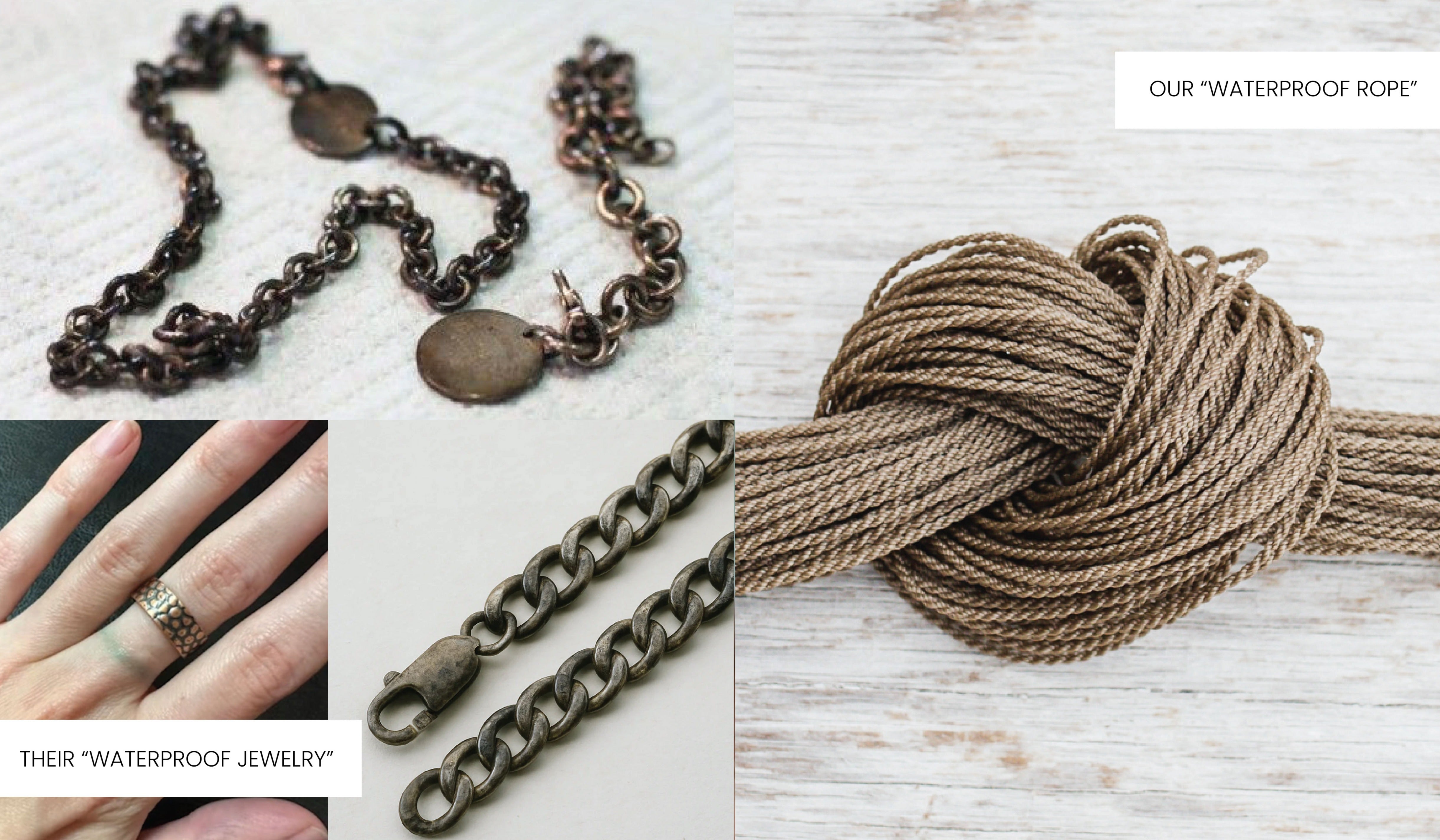
This is where most of the jewelry marketed as tarnish-free quietly sets you up to be disappointed. Plated and PVD-coated pieces are, technically, tarnish-free, right up until the coating wears through. The coating is a thin shell over a base metal, and once it thins at the clasp or the inside of a ring where it rubs against skin, the metal underneath starts reacting exactly like any other metal would. You didn't buy bad jewelry. You bought jewelry that told you the truth for six months and then stopped.

The Jewelry That Doesn't Tarnish, And Why
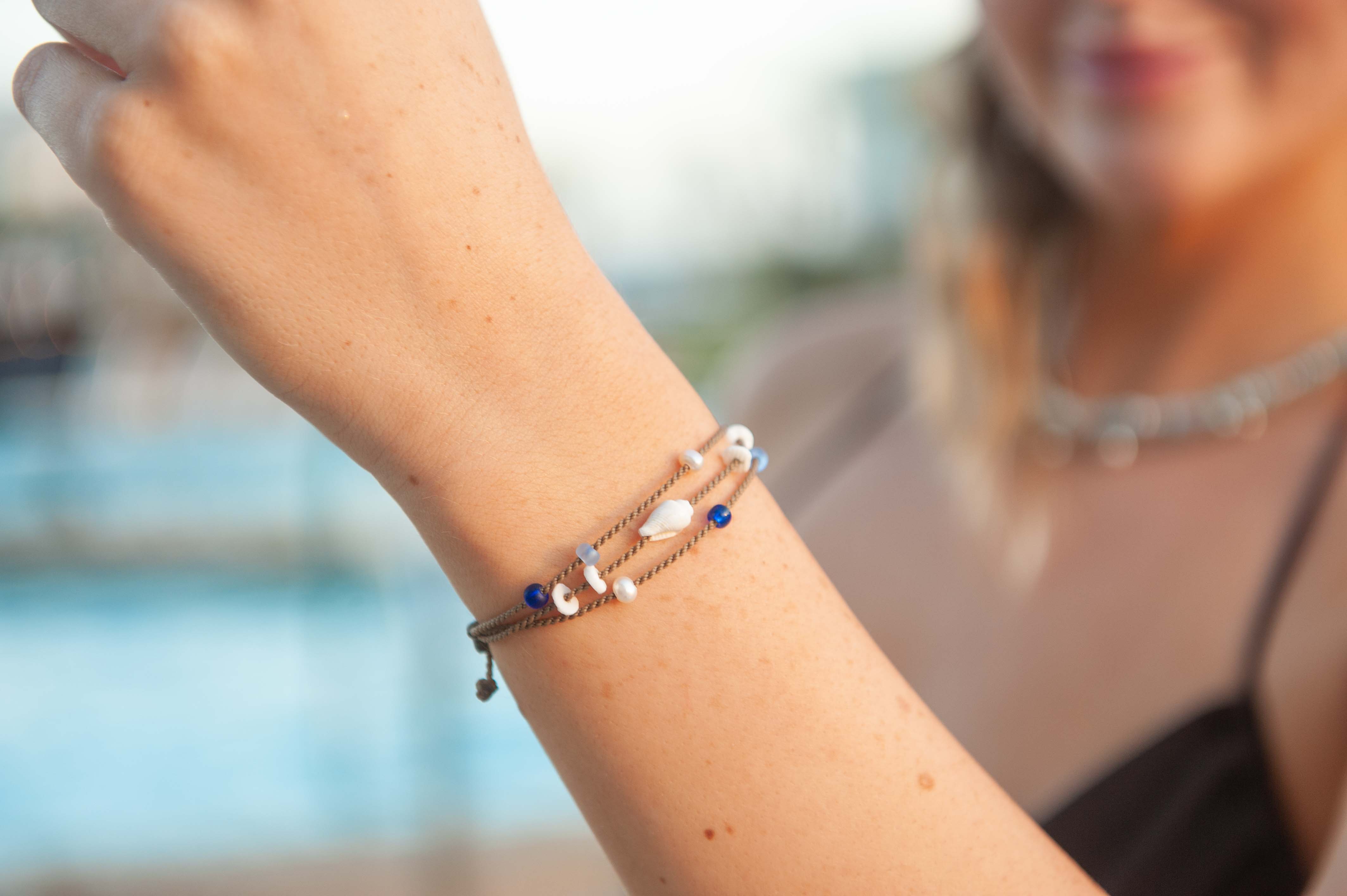
This is the reframe, and it's simple enough that it sounds almost too easy. Every metal, even the good ones, is playing defense against a reaction that will eventually catch up to it in some form. Rope isn't playing that game. Our hand-spun, nautical-grade rope has no metal in it, so there's nothing for the air, the ocean, or your sweat to react with. Search "tarnish-free jewelry" or "non-tarnish jewelry" and you'll mostly find coated metal arguing about which coating lasts longest. Rope skips the argument entirely. The rope never tarnishes. Neither do the freshwater pearls, the sea glass, or the natural stones we build every piece around, not because they're coated well, but because there's no chemical reaction available to happen in the first place.
This isn't a theory. Miki C., a Tula Blue customer, put it plainly: "I have trouble with metals fading or tarnishing due to sweat, and these hold up beautifully! I wear them each in the rotation often." robin l. wears her Sea Glass Bracelet through three chlorinated pool swims a week and says it's held up the whole time. Sandra W. wore her Everyday Pearl Necklace continuously for weeks straight, at work, exercising, sleeping, and says it still looks new. That's not a coating holding on for dear life. That's a material with nothing to lose in the first place.

What Can Still Happen (Because We're Not Going to Pretend Nothing Can)
Rope, pearls, and stone don't tarnish, but "doesn't tarnish" isn't the same as "nothing ever happens to it." Our rope is built to be worn every single day for years, and we hear it from customers directly. Dorothy B. says she has friends who never take theirs off and have been wearing it for 5 years. Denyse G. has had pieces since the beginning and says nothing has ever broken or left her. Linda H. has worn six Tula Blue bracelets for years and says they last forever. That's not the outer edge of what the rope can do. That's just what we have on record in writing. Stones can show a little wear at the surface after years of daily contact, the same way anything touched every day eventually shows it's been touched every day.
That's exactly why the rope is covered for life. If it ever breaks, tomorrow or in 10 years, send it back and we'll restring it. No questions asked.

How to Tell If What You're Already Wearing Is Plated
If you're not sure whether a piece you already own is solid metal or a coating, there are a few honest tells. Look at the spots that see the most friction, the inside curve of a ring, the back of a clasp, the underside of a bracelet where it rubs against your wrist. If those spots look a slightly different color or shade than the rest of the piece, that's the base metal starting to show through a worn coating. A price that felt low for the amount of "gold" or "silver" on the piece is usually another honest signal, plating is what makes fine-metal looks affordable. Neither of these means you were misled. It just means the piece was doing exactly what plated jewelry does.

The Same Problem Shows Up With Hypoallergenic
If you've searched for tarnish-free jewelry, you've probably also searched for a hypoallergenic necklace, a hypoallergenic anklet, or hypoallergenic metals in general, because they're often the same worry wearing different names. Nickel allergy affects an estimated 8 to 19 percent of adults in the general population, with a strong predominance in women. Nickel is one of the most common alloy metals hiding inside cheaper jewelry, plated or not, and it's frequently what's underneath once a coating wears through. A piece that's metal-free doesn't just skip the tarnish problem. It skips the reaction that causes that itch at the back of your neck by lunchtime, too. Same root cause, same fix.
Best Metal-Free Rope Jewelry for Sensitive Skin

Comparison: What Actually Happens to Each Material Over Time
| Material | Why It Reacts (Or Doesn't) | Realistic Timeline |
|---|---|---|
| Sterling silver | Copper in the alloy reacts with sulfur in the air | Visible tarnish within weeks of regular wear |
| Gold-plated / PVD-coated | Coating is tarnish-free until it wears through to the base metal | Months, depending on contact and friction |
| Titanium | Self-healing oxide layer, nothing to strip away | Does not tarnish |
| Platinum, high-karat gold | Minimal reactive alloy content | Very slow, may soften in shine over decades |
| Hand-spun rope, pearls, stone (Tula Blue) | No metal present to oxidize | Never tarnishes, worn continuously |

What This Means for What You Buy Next
If you want metal and you want it to last, titanium and high-karat gold are the honest upgrades, not another "tarnish-resistant" plated piece wearing a new coating and a new name. But if you're tired of thinking about it at all, of checking whether today is a shower day or a pool day or a gym day for your jewelry, the rope was built for exactly that. Customers who start with a tarnish-free necklace like the Everyday Pearl, a tarnish-free bracelet like the Riptide, or a tarnish-free anklet from the same collection tell us the same thing every time: they put it on once and stopped taking it off. It goes on and you stop thinking about it, which is what you were asking for when you typed "jewelry that doesn't tarnish" into Google in the first place.
shop waterproof jewelry, and start with the piece you never have to think about again.



Leave a comment
This site is protected by hCaptcha and the hCaptcha Privacy Policy and Terms of Service apply.