

Best Jewelry for Swimming: The Only Pieces Worth Getting Wet
Most jewelry comes with invisible rules for water. Quick rinse fine. Pool occasionally. Ocean carefully. Hot tub definitely not. The only jewelry that skips all of those rules is the kind with nothing in it to corrode, coat, or react. Here's what that actually looks like in the pool, the ocean, and the lake, and why rope changes the answer entirely.
The summer of 2020 felt strange and, somehow, magical at the same time. My kids spent six days a week at our lake park down in West Austin. Four to eight hours a day, in and out of the water, the lake, the pool, the volleyball court, the basketball court, back in the lake. All of them wearing their Tula Blue.
I'd have a babysitter down there with them in the mornings while I worked, and then I'd come join them and nobody wanted to leave. It was like an 80s summer. The kind where kids are just outside all day and nobody worries about anything.
I never had to worry about their jewelry. Not once, through an entire summer of that.

In the Pool
Chlorine is the most common reason jewelry comes off before a swim. At typical pool concentrations of 2 to 5 parts per million, chlorine accelerates the degradation of PVD-coated finishes with repeated daily exposure. It doesn't happen in one swim. It happens over weeks and months, and it happens fastest at the points of highest friction: clasps, the inside of ring bands, anywhere the coating rubs against skin.
Rope has no coating to degrade. The nautical-grade whipping twine that makes up every Tula Blue piece doesn't react to chlorine any more than a nylon swimsuit does. The kids swam in a chlorinated pool that entire summer, every week, and the jewelry came out the same way it went in.
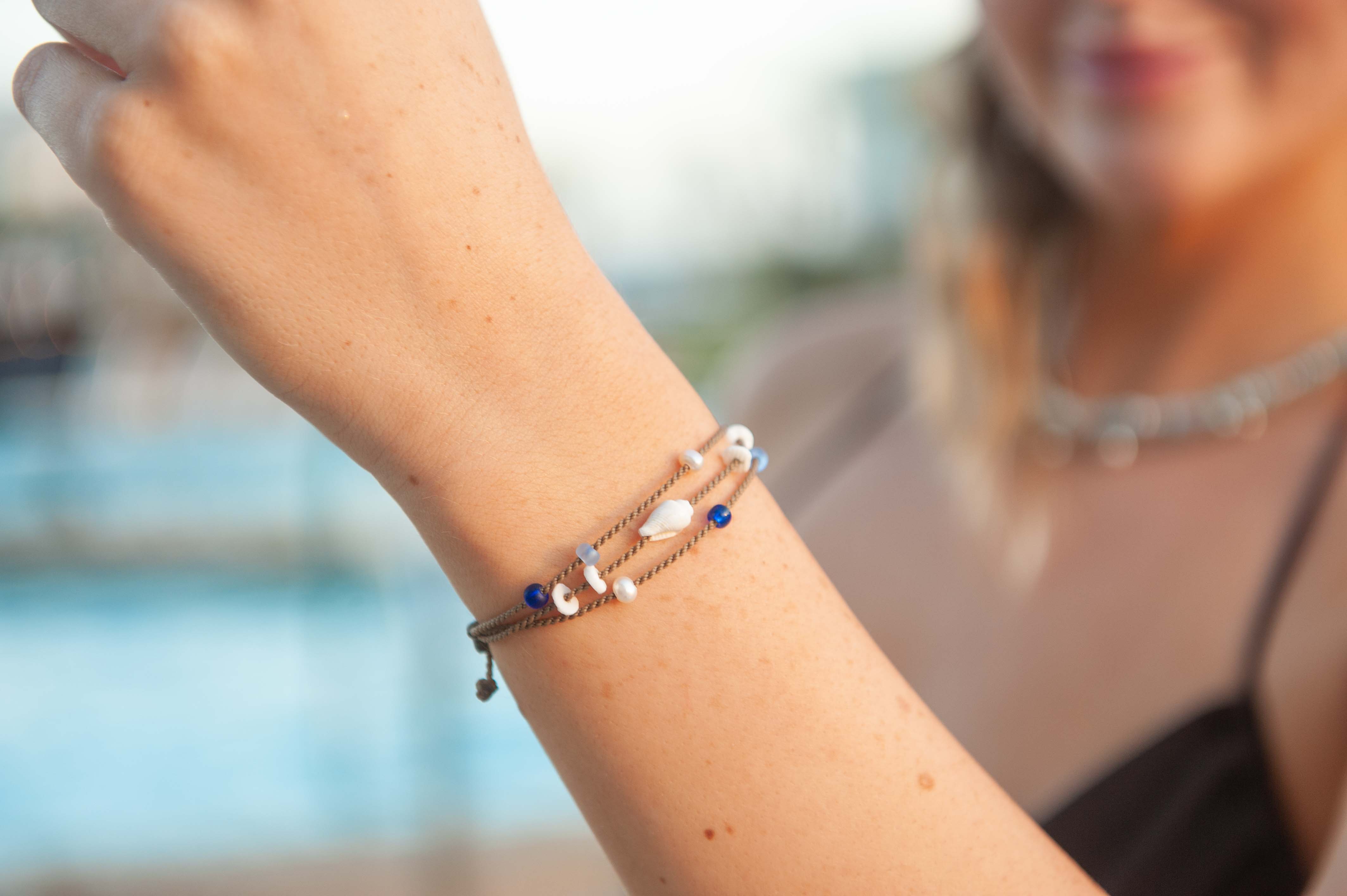
The best pool pieces: the Everyday Pearl Bracelet for daily swimmers who want something low-profile, and the Riptide Pearl Bracelet for anyone who wants more on the wrist. Both are worn by customers through three-times-a-week lap sessions without any change in the rope or the pearl.

In the Ocean
Saltwater is more complex than pool water. Salt, microorganisms, and the mechanical force of waves create a corrosive environment that attacks metal coatings over time. Even solid gold is not immune: the Jewelers of America has warned that extended saltwater exposure can damage and discolor metals and slowly erode the finish on gemstones.
None of that applies to rope.
The whipping twine Tula Blue uses is marine-grade, literally the same material used to secure rigging on sailboats in open-ocean conditions. Saltwater is not a threat to it. It's the environment it was designed for.
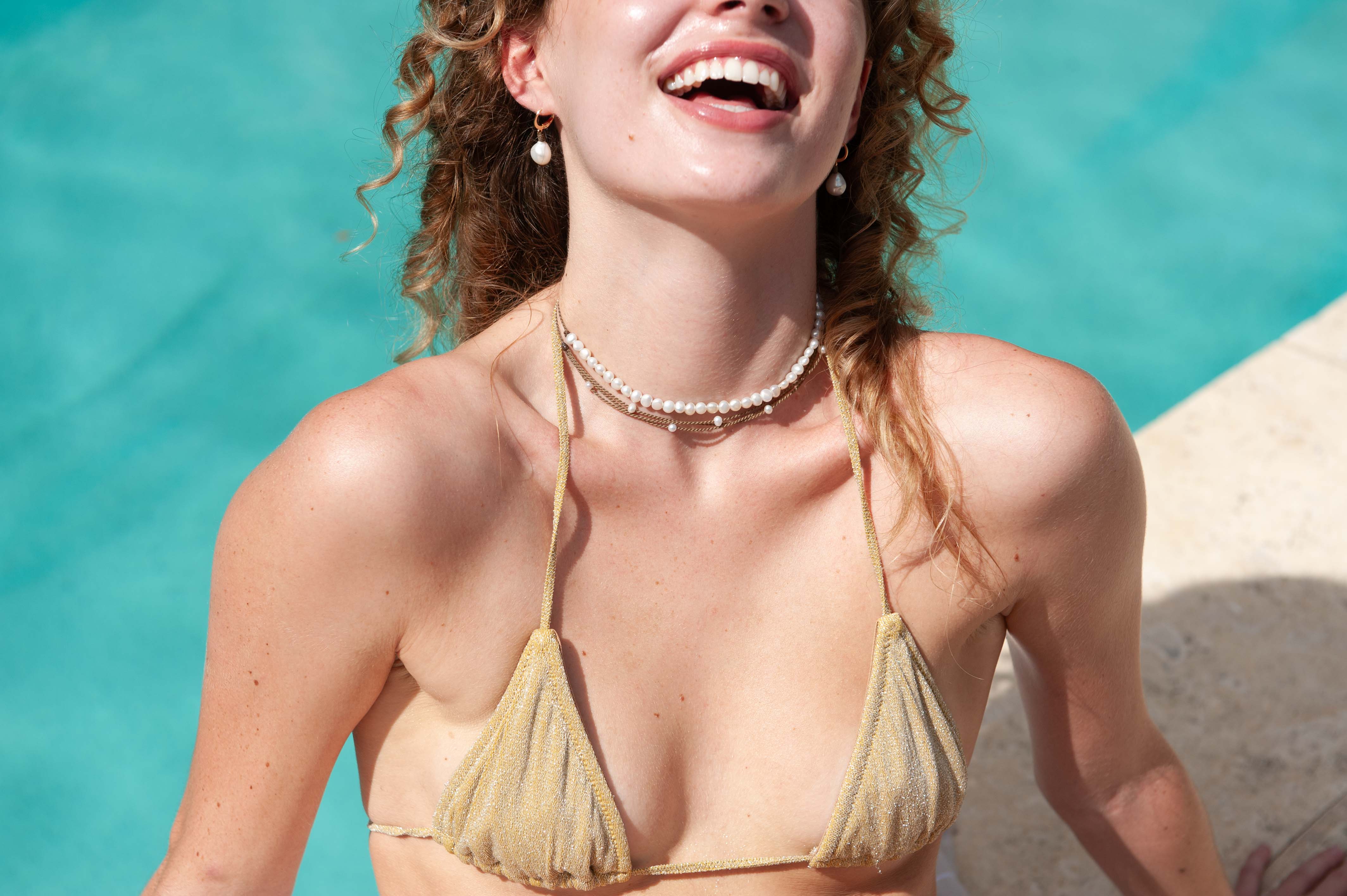
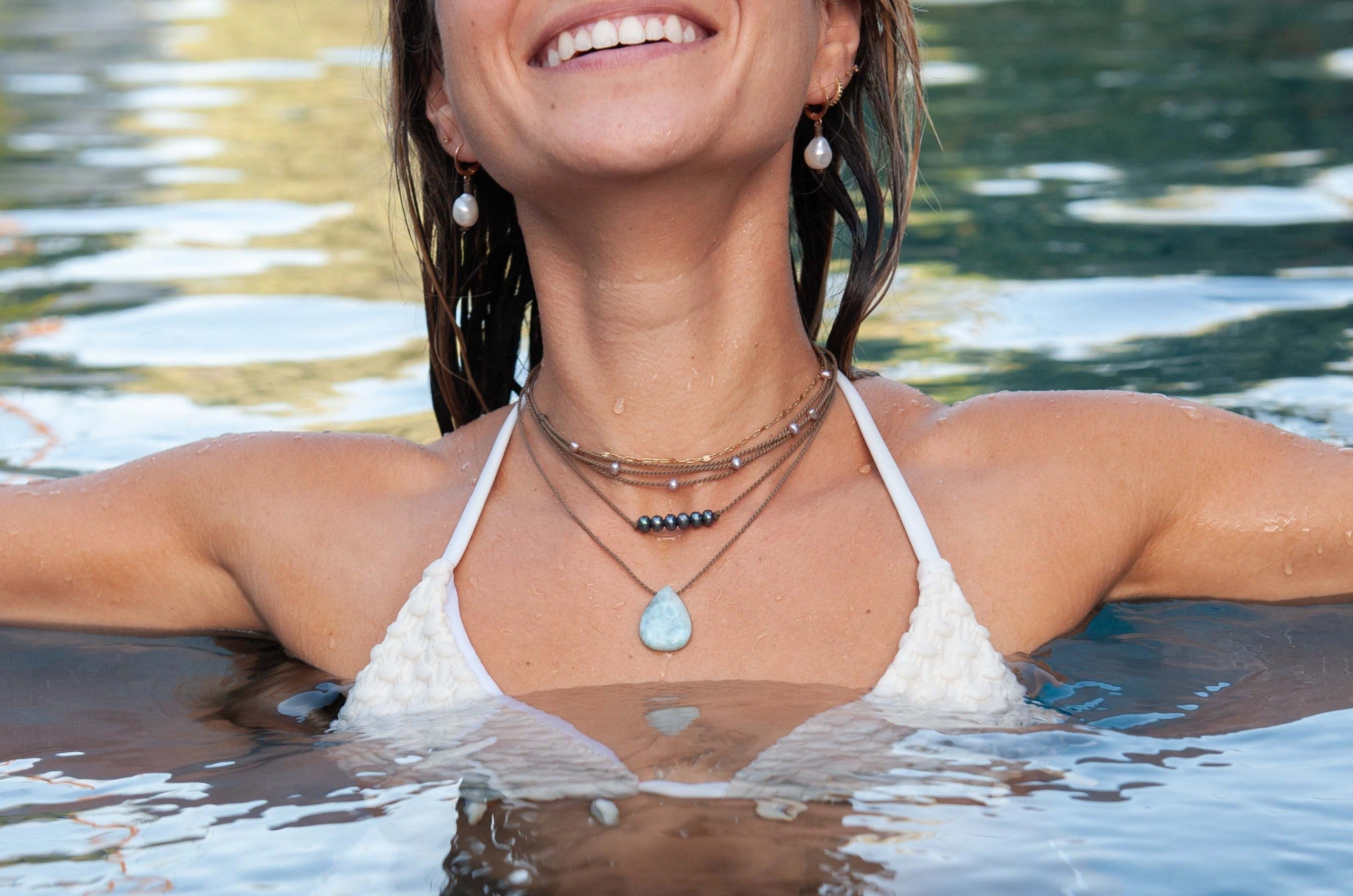
The ocean piece worth building around: the Live In Pearl Necklace , which is named exactly what it is. Pair it with the Riptide Pearl Bracelet and the Everyday Pearl Anklet and you have a stack you can walk straight into the water with, every time.
One honest note on pearls and the ocean: saltwater is fine for extended swims. After a beach day, rinse your pieces in fresh water and let them dry. Not because the rope needs it, it doesn't, but because salt residue on freshwater pearls over a long season is worth clearing. Thirty seconds. That's the full care routine.

In the Lake
Lake water sits between pool and ocean in terms of chemical exposure: no chlorine, no salt, but natural minerals, sediment, and varying pH depending on the body of water. Most jewelry guides don't address lake swimming at all.
The answer for rope is the same as everywhere else. No metal to corrode, no coating to degrade, nothing that reacts to water chemistry. The West Austin lake park has a pool and a lake in the same park. The kids went back and forth between both all day, and the jewelry moved with them without a thought.
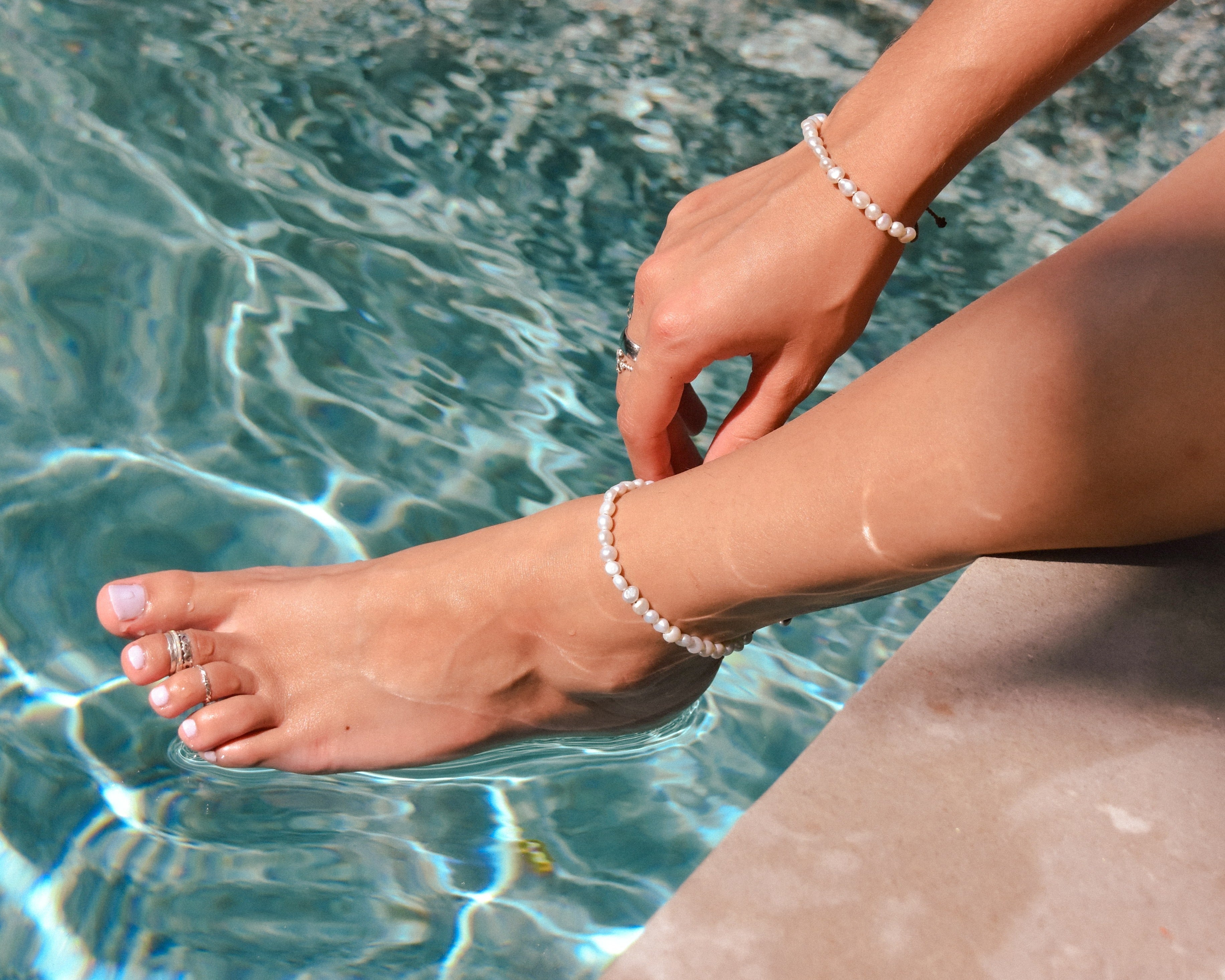
The Everyday Pearl Anklet is the piece that gets worn hardest in lake and freshwater settings, customers describe it staying on through kayaking trips, canoe weekends, and lake vacations without any change in the rope or the fit.

The Hot Tub Caveat
Hot tubs are the one context where the honest answer requires a note.
For PVD-coated jewelry, hot tubs are the most damaging environment of all. Testing has shown detectable surface dulling on gold-plated pieces after just 30 minutes of hot tub exposure, the combination of high heat and elevated chlorine concentrations accelerates degradation faster than any other water environment. Even brands with strong waterproof claims typically recommend removing jewelry before hot tubs.
For rope, the story is different but not without a caveat of its own.
The rope itself handles hot tub conditions fine. No metal to corrode, no coating to compromise. The honest note is specifically for freshwater pearls: extended time in a highly chlorinated hot tub over a long period is the one context where it's worth giving pearls a rest. A quick dip, a short soak, completely fine. An hour every night on vacation, multiple nights in a row? Rinse your pearls afterward and give them a day off between sessions.
Everything else in the line, stone pieces, rope-only pieces, handles hot tubs without issue.

The Swim Stack
For a summer that includes pool, ocean, lake, and whatever else comes up, three pieces cover everything:
The Live In Pearl Necklace as the necklace that goes into every body of water and comes out looking the same. The Riptide Pearl Bracelet for the wrist, the most reordered piece in the Tula Blue line, which says everything about how it wears. And the Everyday Pearl Anklet for the ankle, because summer without an anklet is just summer with shoes.
Add all three and the automatic 15% discount applies at checkout, no code needed.
Ready to Get In the Water?
The Waterproof Rope Jewelry collection is built from nautical-grade rope with nothing in it to corrode, coat, or react, and it was made for exactly this.


Written by Heather Stringer

Leave a comment
This site is protected by hCaptcha and the hCaptcha Privacy Policy and Terms of Service apply.